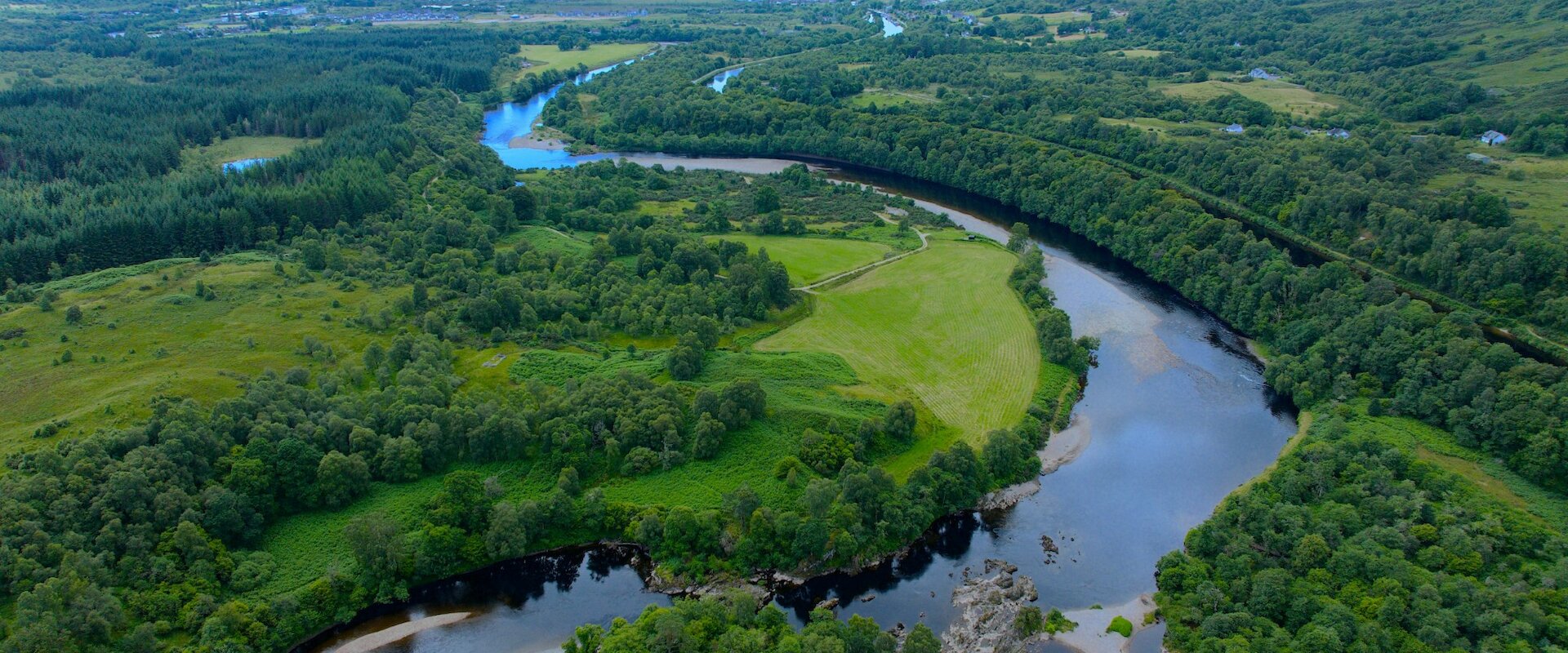

Almost £230,000 is being awarded to nine conservation projects this year through Salmon Scotland’s wild fisheries fund.
The projects stretch from Ayrshire and Galloway to Argyll, Lochaber, Loch Lomond, and the Western Isles.
They include riverbank restoration, tree planting, improved spawning grounds, and new technology to track the movements and survival of individual salmon.
Since its launch in 2021, the wild fisheries fund has delivered £1.5 million for practical conservation and restoration work, supporting 30 local projects across Scotland.
Salmon farmers have now committed a further £460,000 over the next two years, taking total investment through the fund to £1.96 million.
On the upper River Ayr, £31,358 will support work to restore and protect 400 metres of badly eroded riverbank.
The project will also install more than 650 metres of livestock fencing and plant native trees to improve habitat for salmon and trout.
In Lewis, Stornoway Angling Association has been awarded £18,600 for work on the River Creed.
Spawning gravels across the catchment and its tributaries will be loosened and cleaned, while a new microchip tag reader will help fisheries experts track individual salmon and sea trout.
In Galloway, £7,769 will help restore tributaries of the River Bladnoch, including returning a previously straightened section of burn to a more natural course and planting 1,000 broadleaf trees.
Wild salmon and sea trout numbers across the UK have been falling for decades, driven by habitat loss, rising river and sea temperatures, and pressure on migration routes.
Marine survival has dropped to between one and five per cent, compared with around 25 per cent 30 years ago.
Other threats include invasive plants choking riverbanks, predation by birds, fish and seals, and obstacles such as dams and weirs that prevent fish from reaching their spawning grounds.
Scotland’s salmon farming companies, which operate on the west coast, Orkney, and Shetland, established the wild fisheries fund to support practical action to conserve and restore wild fish populations.
The fund is co-ordinated by Jon Gibb, a fisheries manager based in Fort William in the heart of the aquaculture sector, who has championed a constructive relationship between the farm-raised salmon sector and fisheries and angling groups.
Tavish Scott, chief executive of Salmon Scotland, said:
“Wild salmon face serious pressures, and our members are committed to playing their part in protecting this iconic species.
“Farmed and wild salmon are both part of Scotland’s story, and we want to use our resources and expertise to help wild populations thrive.
“By continuing this investment, we can help local organisations turn good ideas into practical action that makes a lasting difference for wild salmon and sea trout.”
Jon Gibb, co-ordinator of the Salmon Scotland wild fisheries fund, said:
“What stands out about these projects is the local knowledge behind them. They are shaped by people who understand their rivers and know where investment can have the greatest impact.
“Several build on work we have supported in previous years, allowing successful projects to develop rather than stopping after one round of funding.
“That continuity is hugely important when you are trying to deliver lasting improvements to rivers and wild fish populations.”
Other projects awarded funding this year are:
· Lochaber Live Gene Bank – £72,800 to continue the long-term programme supporting salmon populations across eight rivers.
· University of Stirling – £30,000 for research at its Machrihanish Environmental Research Laboratory into whether rearing wild salmon smolts to adulthood could help conserve threatened populations.
· River Ruel Gene Bank – £36,657 to continue the live gene bank project with Otter Ferry Seafish.
· River Eachaig Fishery Syndicate – £10,000 for riverbank protection, livestock fencing, and the planting of 1,000 trees.
· Lochaber Fisheries Trust – £5,280 for genetic screening of salmon populations in the rivers Moidart and Finnan.
· Loch Lomond Fisheries Trust – £17,361 for further habitat restoration at Glen Fruin, including work to investigate and tackle a section vulnerable to drying out.
Struan Candlish, fisheries biologist with Ayrshire Rivers Trust, said:
“Ayrshire Rivers Trust is very pleased to be supported by the wild fisheries fund for our project on the upper River Ayr.
“Through a combination of tree planting, natural riverbank protection and fencing, we aim to reduce sediment entering the river and improve the habitat along its banks, helping boost salmon and trout numbers in the headwaters of the River Ayr.”
Richard Davies, Outer Hebrides Fisheries Trust chairman, said:
“The funding from the wild fisheries fund will help the Stornoway Angling Association use the traditional method of gravel loosening and cleaning to expand the important spawning grounds on the River Creed catchment area and tributaries, helping optimise conditions for young salmon and increase their population.
“These had been negatively impacted of late due to silt run off and reduced adult spawners in recent years.
“The association will also be able to use a new microchip tag reader to deliver crucial insight, by measuring where in the river juvenile salmon are originating and which have the best survival, which will aid in identifying areas for future habitat improvement.”
Robert Younger, manager of the River Eachaig Fishery Syndicate, said:
“Fisheries managers are facing growing challenges from climate change, with heavier rainfall and more frequent flooding eroding riverbanks and damaging important habitats.
“The wild fisheries fund is helping us continue vital work on the River Eachaig. The funding will support natural measures to strengthen a further stretch of riverbank, repair previous work, install livestock fencing and plant 1,000 trees to protect and improve the riverside environment.”
